

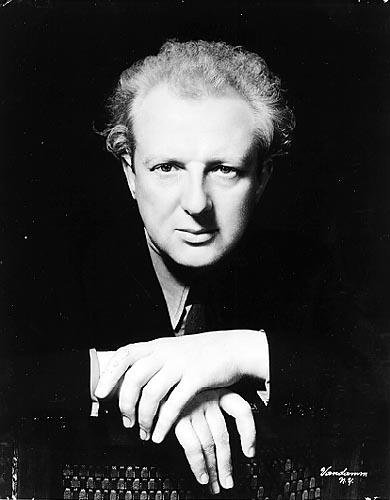
Have you ever wondered what makes a musical genius? Well, let’s start with the beginnings of one such legend—Leopold Stanislaus Stokowski. Born on April 18, 1882, in the bustling city of London, this future maestro was set to take the world by storm with his incredible talent. Right from an early age, his fascination with music was evident. Imagine a young Stokowski attending the prestigious Royal College of Music and later Queen’s College, Oxford, soaking in every note and rhythm like a sponge.
But that’s just the tip of the iceberg. Before he was waving the conductor’s baton, he was enchanting audiences as an organist and choir director, first in charming English churches and later at New York City’s St. Bartholomew’s Church. His talent didn’t just resonate with audiences but also caught the ears of the influential Vanderbilt family among others. Talk about making an impression!
The Cincinnati Symphony Orchestra Adventure
You might be thinking, “When did Stokowski really hit his stride?” Picture this: a 27-year-old Stokowski, stepping onto the conductor’s podium for the first time with the Cincinnati Symphony Orchestra in 1909. That must have been some nerve-wracking debut, right? But this was just the beginning of an exhilarating journey that would soon take him across the globe.
After his vibrant start in Cincinnati, he made waves in Paris with the Colonne Orchestra, presenting Tchaikovsky’s Piano Concerto No. 1 alongside pianist Olga Samaroff. Just a few days later, London audiences got to experience the magic of Stokowski in person, solidifying his name as a rising star in the world of classical music conducting. It’s awe-inspiring to think how quickly he rose through the ranks, isn’t it?
Revolution at the Philadelphia Orchestra
Now, let’s fast forward to perhaps the most thrilling chapter in Stokowski’s career! His role with the Philadelphia Orchestra starting in 1912 was nothing short of revolutionary. Think of an artist reshaping an entire orchestra’s sound, and that’s exactly what Stokowski did. He didn’t just conduct music; he sculpted it into what became known as the iconic “Philadelphia Sound,” a lush tapestry of sonorous tones.
Ever the innovator, he pioneered transformative techniques—like “free bowing” for strings and “free breathing” for brass—giving orchestral music a whole new dimension. Not to mention his unconventional seating arrangements. Who would think of lining up string basses in the back or spreading violins and cellos across the stage? Stokowski was fearless and even ditched the baton, opting for elegant hand gestures. Talk about dramatic flair!
Leading the Musical World
By now, you might be wondering, “Did Stokowski ever slow down?” Quite the contrary! After leaving the Philadelphia Orchestra, he continued to electrify the music world with leadership roles at several top-notch orchestras. He founded and led the All-American Youth Orchestra on a whirlwind tour, worked as co-conductor with the legendary Arturo Toscanini at the NBC Symphony Orchestra, and even helped establish the New York City Symphony Orchestra.
Stokowski wasn’t confined to the concert hall either. He shared his genius at the outdoor spectacles of the Hollywood Bowl Symphony Orchestra and held a special guest conductor position at the New York Philharmonic. It’s clear that wherever there was an orchestra looking for vibrancy and innovation, Stokowski was there with his magic touch.
Champion of Contemporary Music
It wasn’t just the classics that stirred Stokowski’s soul. He was a champion of contemporary music, a pioneer introducing audiences to new sounds and fresh compositions. Now, imagine him at the helm, conducting American premieres of works from the likes of Elgar and Mahler. But one of his most breathtaking achievements? Conducting the world premiere of Charles Ives’s Symphony No. 4 at the ripe age of 83 with the American Symphony Orchestra.
His devotion to new music was more than just a personal passion—it was a driving force that pushed classical music forward. This dedication ensured audiences weren’t just staying with old favorites but were being introduced to groundbreaking new works. Stokowski’s foresight in music might as well have been what set the tone for the future of symphonic music.
Recording Innovations
And just when you think a career like Stokowski’s couldn’t possibly get more exciting, he takes another leap—in recording technology. In 1925, he conducted America’s first-ever electrical recording with an orchestra, opening new avenues for experiencing music. Imagine being one of the first people to turn on the radio or a gramophone and hear the rich textures of Saint-Saëns’s *Danse Macabre* as if the Philadelphia Orchestra was performing right in your living room.
These recordings weren’t just records; they were revolutionary, bringing the symphonic experience to people who might never have stepped into a concert hall. Stokowski wasn’t just a conductor; he became a bridge between classical music and the growing world of audio technology. It’s no exaggeration to say that his recordings changed the trajectory of music consumption globally.
Reflecting on a Storied Legacy
As we wrap up this incredible journey, it’s impossible not to reflect on the remarkable legacy Stokowski left behind. Not only did he transform orchestras and push the boundaries of classical music, but he also set the stage for the future, leaving an indelible mark that resonates even today. From the moment he first took up the baton—or rather, set it down—his career was a thrilling symphony of innovation and passion until his passing on September 13, 1977.
His journey from the young organist in London to a global conductor has been nothing short of legendary. Stokowski showed us the power of music to evolve and inspire, touching countless lives along the way. His life’s work, full of bold choices and artistic bravery, is still celebrated by music lovers around the world.
Ready to dive into new projects, tours, or just listen to classical music downloads with the same passion Stokowski once pursued? Check out more on how this passion can turn into your path at Artifex Business!
Leopold Stokowski, the maestro who turned music into an electrifying journey, left a legacy that continues to inspire conductors, musicians, and music enthusiasts alike. His life was truly a harmonious blend of tradition and innovation. So, the next time you listen to an orchestra, tip your hat to Stokowski, the man who helped shape the sound of classical music as we know it today!
Also Read:
